Inside Slot Engine Design: Harmonizing Win Frequencies with Expanding Jackpot Mechanisms
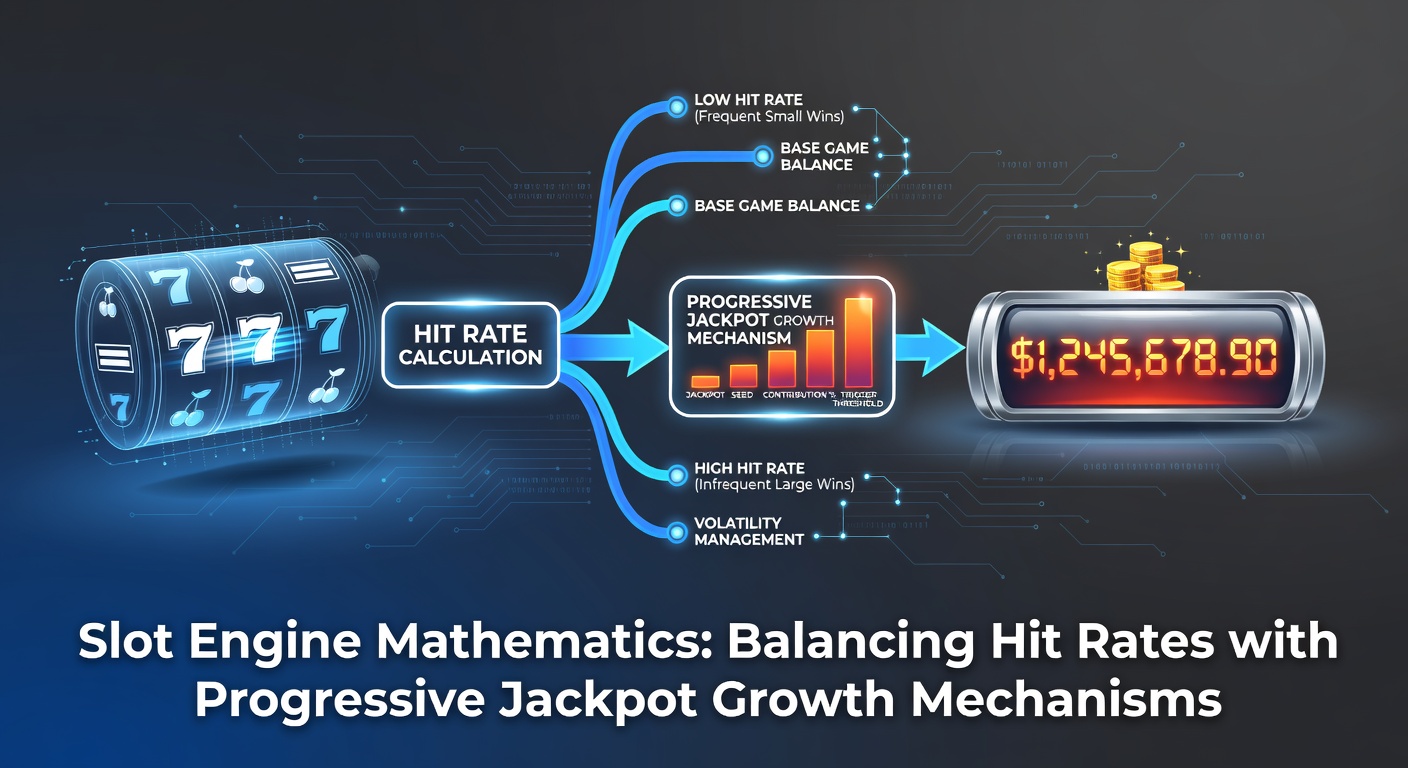 Slot developers calibrate hit rates against progressive jackpot increments through precise mathematical models that allocate portions of each wager to both immediate payouts and accumulating prize pools. These systems rely on random number generators to determine outcomes while maintaining target return-to-player percentages across millions of simulated spins. Engineers adjust parameters such as reel strip configurations, symbol weights, and contribution rates to ensure the jackpot grows steadily without undermining base game frequency. Hit rate represents the proportion of spins yielding any prize, typically ranging between 20 and 40 percent in commercial titles. Progressive mechanisms divert a fixed percentage, often 1 to 3 percent, from every bet into a shared pool that escalates until triggered. Designers must synchronize these elements because elevated hit rates increase short-term payout volume, which can slow jackpot accumulation if the overall RTP remains fixed.
Core Mathematical Components
Random number generators produce outcomes at intervals measured in milliseconds, mapping results to virtual reel positions that determine symbol combinations. Hit frequency calculations incorporate the total number of winning lines or clusters and their respective probabilities. Progressive growth follows a linear model where each coin inserted adds a predetermined increment to the meter, with seed values established at launch to guarantee minimum starting amounts.
Researchers at the University of Nevada's International Gaming Institute have documented how contribution rates interact with volatility indices, noting that lower hit frequencies allow larger portions of the RTP to flow into jackpots while preserving overall player retention metrics. Data from regulatory filings across multiple jurisdictions confirm that these adjustments occur during extensive testing phases involving billions of simulated plays.
Balancing Mechanisms in Practice
Engineers employ tiered contribution structures where base game RTP absorbs most of the mathematical load, leaving a narrow band for jackpot seeding and incremental growth. When hit rates climb too high, frequent small wins consume RTP that might otherwise support pool expansion, potentially extending the time between major awards. Conversely, sparse hit rates can frustrate players and reduce session length even as jackpots swell faster.
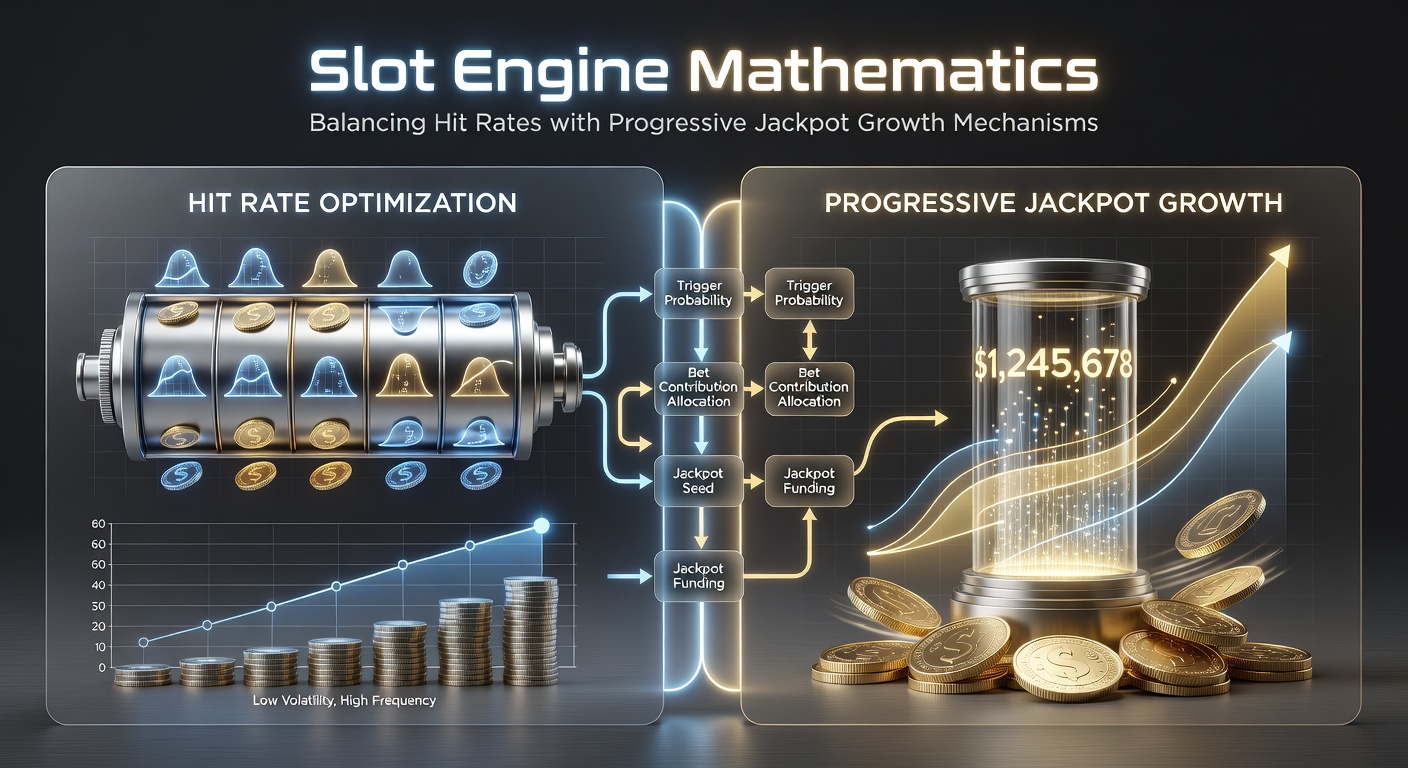
One documented approach involves dynamic scaling during development, where teams lower base game hit frequency slightly to accommodate larger jackpot contributions while inserting compensating features such as multipliers or retriggers. Figures from the Nevada Gaming Control Board show progressive titles maintaining consistent RTP bands between 92 and 96 percent despite these internal reallocations.
Industry Data and Recent Trends
As of May 2026, aggregated reports from the Australian Gambling Research Centre indicate that linked progressive networks across multiple venues have seen average pool growth rates accelerate by 12 percent compared with standalone machines, largely due to refined hit rate modeling. These networks pool wagers from geographically dispersed locations, amplifying increment speed while requiring centralized servers to track contributions accurately.
Studies published through the European Gaming and Betting Association reveal that titles with hit rates near 28 percent paired with 1.5 percent jackpot contributions achieve trigger intervals averaging once every 4.2 million spins in high-volume environments. Such statistics guide operators when selecting games for different floor segments, matching volatility profiles to player demographics.
Regulatory and Testing Frameworks
Jurisdictions mandate independent laboratory verification of RNG integrity and payout tables before deployment. Testing protocols include stress simulations that run for extended periods to confirm both hit frequency stability and jackpot increment accuracy under varying bet levels. Any deviation beyond specified tolerances triggers recalibration before certification.
Canadian provincial regulators, including those in Ontario, require transparent disclosure of contribution percentages in game rules, enabling players to understand how each wager supports progressive pools. These disclosures appear alongside RTP figures and help maintain trust in the underlying mathematics.
Conclusion
Slot engine mathematics demands continuous refinement of hit rate parameters alongside progressive contribution rates to sustain both frequent engagement and substantial jackpot potential. Through detailed simulations and regulatory oversight, developers maintain equilibrium that supports long-term operation across diverse markets. The interplay between these elements continues to evolve with advances in server-based gaming and networked jackpot systems.