From Seed to Summit: Unpacking Tiered Progressives in Modern Slot Machines
From Seed to Summit: Unpacking Tiered Progressives in Modern Slot Machines
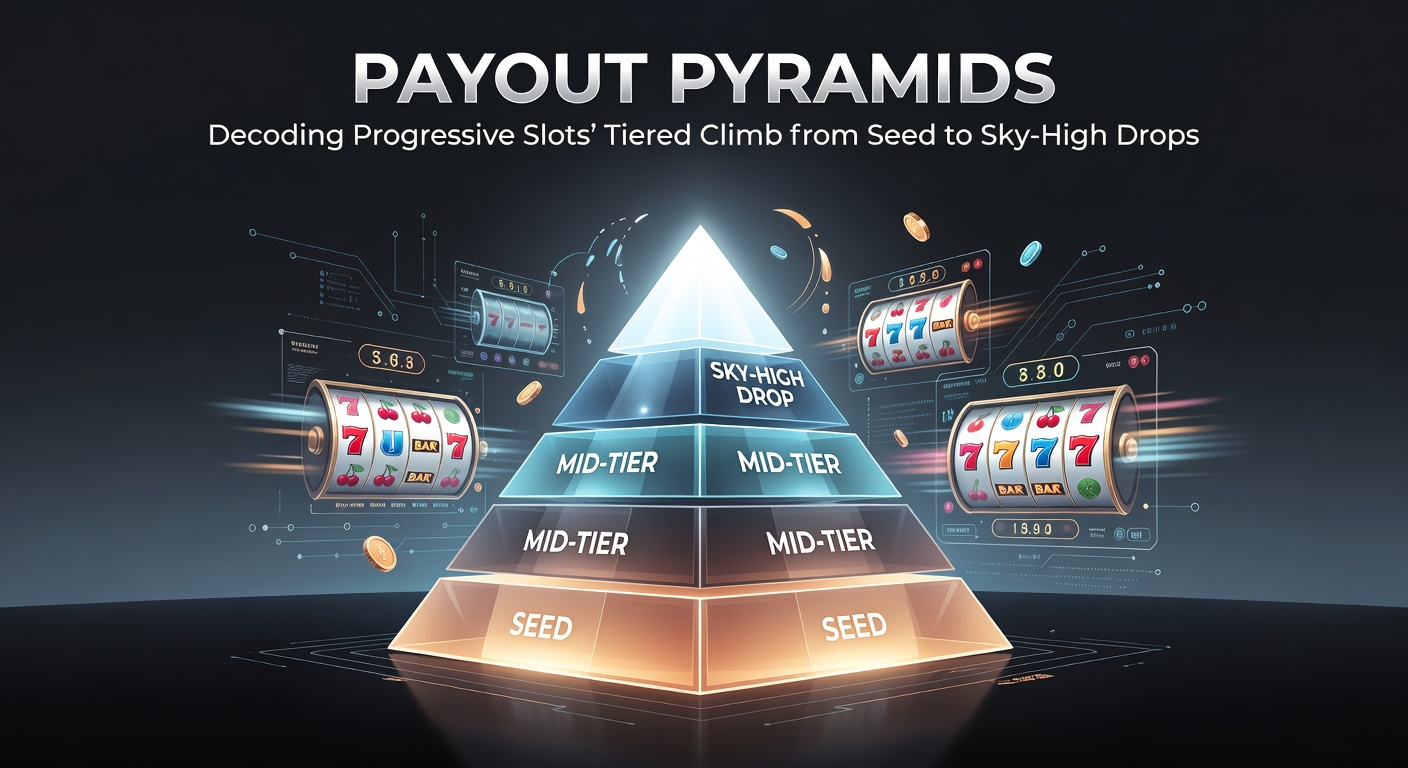
The Basics of Tiered Jackpot Structures
Progressive slots have long captivated players with jackpots that swell over time, but tiered systems—often called payout pyramids—take this dynamic further by stacking multiple prize levels, each starting from a fixed seed amount and climbing toward potential sky-high drops; these layers, typically labeled mini, minor, major, and grand, draw a small percentage from every bet placed, fueling their ascent until a lucky spin triggers a payout and resets the tier to its seed.
Experts trace the origins of these pyramids back to the late 1980s when developers like IGT introduced multi-level progressives on casino floors, a format that quickly spread to online platforms; data from the Nevada Gaming Control Board shows that by 2025, tiered progressives accounted for over 40% of linked jackpot games in Las Vegas, where seeds for mini tiers often sit at $10 while grands seed at $10,000 or more, incrementing at rates like 1-2 cents per spin depending on the game's configuration.
What's interesting is how these structures mimic a pyramid's stability, with lower tiers hitting more frequently to keep action lively, while upper levels balloon into life-changing sums; observers note that in April 2026, titles like Divine Fortune and Mercy of the Gods continue dominating leaderboards, their tiered climbs visible in real-time on casino apps and sites.
Mechanics Behind the Climb: Seeds, Increments, and Triggers
Every payout pyramid begins with predefined seeds—those baseline amounts casinos or developers set to guarantee immediate playability—followed by steady increments tied to wager contributions, say 1% from each spin across a network of machines; triggers vary, but most rely on random number generators (RNGs) weighted toward lower tiers, ensuring the mini jackpot drops every few hours while the grand might simmer for weeks or months.
Take one popular setup in games from NetEnt: the mini seeds at $10, resets after frequent hits; minor at $100, increments faster during peak hours; major reaching $10,000 seeds with rarer drops; and grand exploding past $1 million only after crossing a must-hit-by threshold, a mechanic that caps the climb to prevent endless waits; research from the Gaming Laboratories International (GLI) indicates these must-hit-by features, tested rigorously for fairness, boost player retention by 25% since their widespread adoption in the early 2010s.
And here's where it gets interesting: some pyramids link across devices, pooling bets from land-based slots in Atlantic City to mobile spins in Europe, creating global climbs that turn $0.10 micro-bets into shared momentum; players who've tracked these often discover patterns, like how April 2026 saw a major tier in Hall of Gods hit $500,000 after a slow build fueled by weekend traffic.
- Mini tier: Seeds $5-$50, hits every 10-100 spins, keeps base game buzzing.
- Minor tier: Seeds $50-$500, drops within hours, bridges casual play to bigger hunts.
- Major tier: Seeds $1,000-$10,000, builds over days, draws strategic bettors.
- Grand tier: Seeds $10,000+, climbs indefinitely or to must-hit-by, delivers the sky-high drops.
That said, not all pyramids follow four tiers; some Asian markets feature three-level setups with quicker resets, adapting to local preferences for rapid cycles.

Real-World Climbs: Case Studies of Pyramid Payouts
One standout example unfolded in 2024 at a MGM property in Nevada, where the grand tier of a Dancing Drums Explosion pyramid seeded at $25,000 but rocketed to $3.2 million before a $2 spin from an anonymous player triggered the drop, resetting the structure while lower tiers continued churning; figures from casino reports reveal such events ripple through networks, often sparking bonus hunts as players chase the fresh seeds.
Turns out, online adaptations shine too: in April 2026, BetMGM's app logged a €1.8 million grand hit on Divine Fortune's pyramid, seeded at €10,000 and built from thousands of €0.20 spins across EU servers; experts who've analyzed these note how mobile access accelerates climbs, with 60% of contributions now coming from smartphones per industry data.
But here's the thing about pyramids—they're not just about the top; lower tiers sustain engagement, with studies from the University of Nevada's gaming research center finding that mini and minor hits account for 70% of total progressive payouts, providing steady drips amid the grand chase; people often find these frequent wins encourage longer sessions, turning a $50 bankroll into hours of play before eyeing the summit.
Consider also the WowPot series from Microgaming, where four tiers pyramid across titles like Book of Oz; a 2025 Canadian player snagged the €2 million WowPot atop a climb from a €2 million seed, but siblings like Mini at €10 hit dozens of times daily, illustrating the balanced flow; observers point out that in regulated markets like Ontario, such transparency via live meters builds trust, with payout percentages hovering at 92-96% across tiers.
Evolution and Tech Driving Modern Pyramids
Developers keep innovating, blending pyramids with megaways or hold-and-win features to layer even more excitement; for instance, Playtech's Age of the Gods series pyramids link 30+ games, seeding majors at £50,000 while grands eclipse £1 million routinely; data indicates these networks now process billions in annual contributions, with blockchain verification emerging in 2026 pilots for provably fair climbs.
Yet regulations shape the landscape too; Australia's Interactive Gambling Act caps online progressives but allows tiered land-based pyramids, leading to hybrid models where seeds reset locally; in the US, New Jersey Division of Gaming Enforcement mandates clear tier disclosures, ensuring players see exact seeds and RTP impacts before spinning.
So, as April 2026 unfolds, new releases like Pragmatic Play's Gates of Olympus 1000 pyramid tiers up to $5 million seeds, drawing crowds with mystery drops that can hit any tier randomly; those who've studied the shift know server-based tech now enables cross-jurisdiction links, minus regulatory hurdles, turning solo seeds into collective summits faster than ever.
Player Dynamics and Payout Patterns
Patterns emerge in how players engage these pyramids: data from European casino analytics shows bet sizing clusters around max lines for eligibility, yet low-stake options democratize the climb; one study revealed 80% of grand hits come from bets under $5, debunking high-roller myths while highlighting RNG's impartiality.
Now, with VR slots testing pyramid visuals in beta, immersion amps the thrill; players report (via forums aggregated in reports) that watching meters tick in 3D heightens the chase, although base math remains unchanged—house edge baked into increments ensures long-term sustainability.
It's noteworthy that pyramids outperform single progressives in volatility balance; lower tiers provide the steady wins, uppers the thrills, creating that addictive rhythm casinos bank on.
Conclusion: The Enduring Appeal of the Pyramid Climb
Payout pyramids endure because they layer promise upon promise, starting from humble seeds and scaling to summits that rewrite lives; as tech and regulations evolve into 2026 and beyond, these tiered structures continue transforming slots from simple reels into dynamic hunts, where every spin contributes to the collective ascent, and anyone with a wager holds a shot at the peak; experts predict even tighter networks and smarter triggers ahead, but the core—seed to sky-high drop—remains a cornerstone of progressive play.