Cluster Pay Systems Drive New Payout Patterns in Digital Reel Engines Across Continents
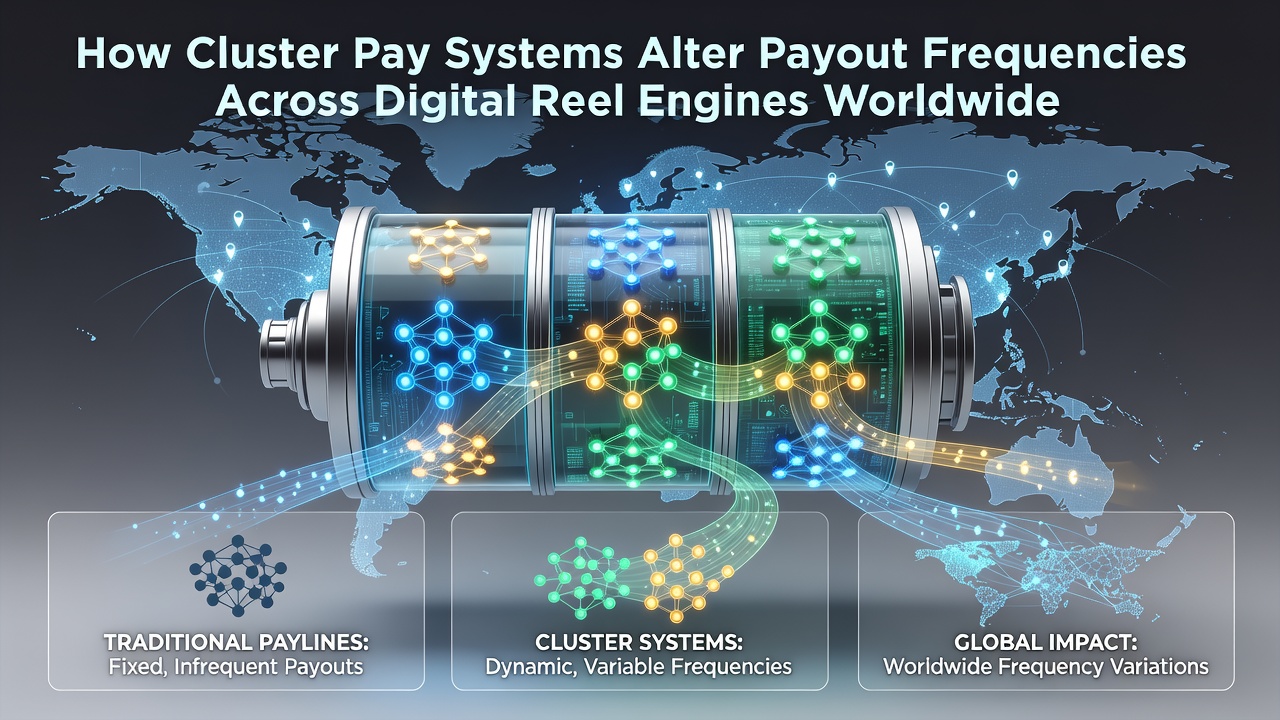
Cluster pay systems replace traditional fixed paylines with requirements for groups of identical symbols that touch horizontally or vertically, and developers have integrated these mechanics into reel engines deployed in markets from North America to Asia since the mid-2010s. Observers note that the shift alters how often winning combinations register because clusters form whenever a minimum number of matching symbols connect, rather than when symbols land on predetermined lines. Research from industry analysts shows that this mechanic produces different hit frequencies compared with line-based slots, where wins depend on specific alignments across multiple reels.
Mechanics Behind Cluster Formation and Frequency Shifts
Digital reel engines using cluster pays typically demand eight or more adjacent symbols of the same type to trigger a payout, though some titles adjust that threshold to five or nine depending on volatility targets. When a cluster lands the symbols disappear, new symbols drop in from above, and additional clusters can form in the same spin sequence, which extends the number of payout events per initial wager. Data indicates that this cascading effect raises the overall hit rate in many configurations while distributing smaller returns across more frequent partial wins rather than concentrating value in fewer line hits. Engineers at major studios adjust reel strips and symbol weights to maintain target return-to-player percentages, yet teh distribution curve changes because multiple small clusters occur more readily than single large line wins.
Comparative Data From Markets Using Cluster Configurations
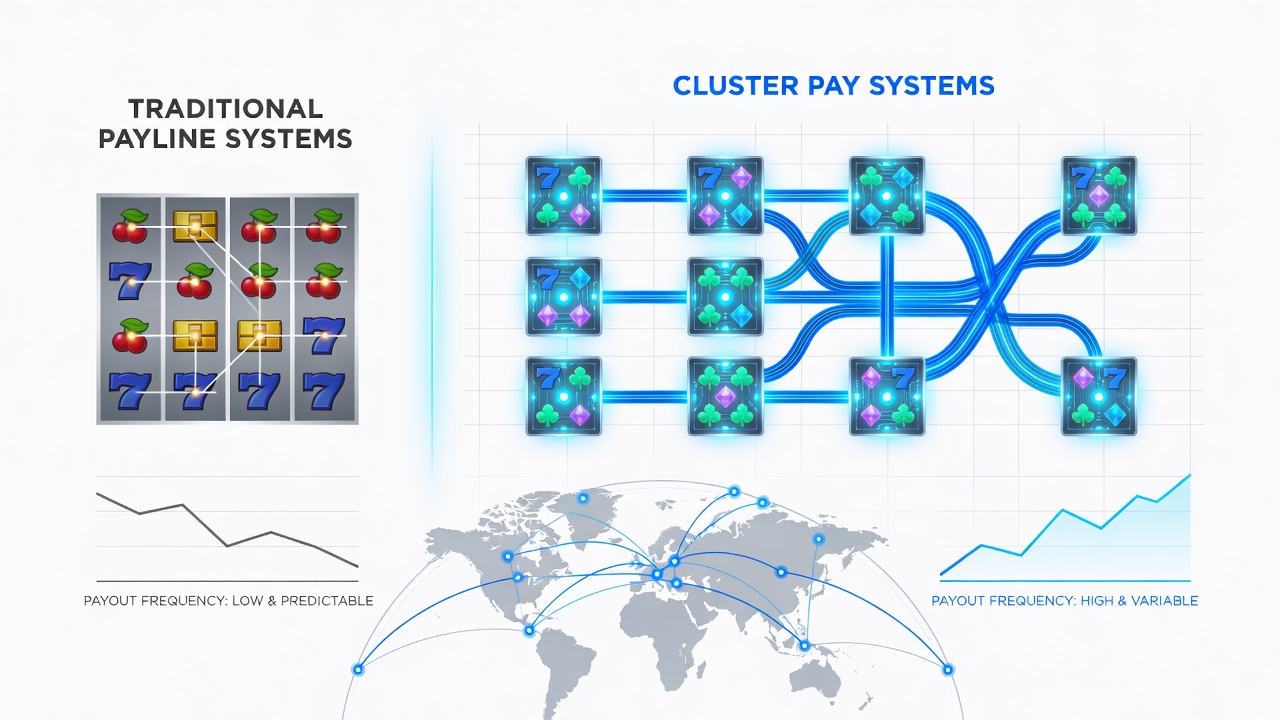
Operators in regulated North American jurisdictions report average hit frequencies climbing when cluster titles replace older line-based games on the same terminals, according to aggregated performance metrics shared by the New Jersey Division of Gaming Enforcement. In contrast, certain European markets that adopted cluster mechanics earlier show steadier but less dramatic increases in payout events because local regulations cap maximum win multipliers during cascades. Australian gaming data collected through state monitoring programs reveals similar patterns, with cluster slots registering wins in approximately 35 to 45 percent of spins versus 20 to 30 percent for comparable payline titles. These figures emerge after controlling for stake size and session length, confirming that the mechanic itself contributes to the observed difference in frequency.
Regional Adoption Trends Observed Through Mid-2026
By July 2026 cluster pay engines had expanded beyond initial strongholds in the United Kingdom and Malta to new installations in Canadian provinces and several Latin American online platforms. Canadian regulators tracking remote gambling activity documented a 12 percent rise in average spins per session on cluster titles compared with legacy formats, attributing part of the increase to the visual feedback of tumbling reels that encourages continued play. In Asia-Pacific markets cluster systems appear in both land-based terminals and mobile applications, where developers modify cluster sizes to suit local player preferences for frequent small returns. Industry reports compiled by the Asia-Pacific Association of Gaming Regulators highlight that payout intervals shorten because clusters activate across larger reel grids that contain more adjacent positions than traditional five-reel layouts.
Volatility and Return Distribution Adjustments
Cluster mechanics often flatten the payout curve because many modest clusters form regularly while large clusters capable of triggering maximum multipliers remain rarer events. Studies conducted by university-affiliated gaming laboratories in the United States confirm that variance decreases in cluster titles when tumble sequences are limited to three or four drops per spin, yet variance rises again once unlimited cascades are permitted. Providers therefore calibrate reel mathematics so that the overall return percentage stays consistent with licensing requirements, even as the timing of individual payouts shifts toward more frequent but lower-value outcomes. Players encounter sequences where several small clusters pay in quick succession before a dry spell occurs, producing a rhythm distinct from the single large line win followed by extended non-paying spins common in older engines.
Technical Factors Influencing Frequency Outcomes
Reel height, symbol distribution, and the presence of wild symbols that expand clusters all affect how often payouts register. Taller grids with six or seven rows increase the number of possible adjacent connections, raising baseline hit rates without altering the underlying random number generation. Software audits performed by independent testing agencies document that cluster detection algorithms must process thousands of potential groupings per spin, and optimized code reduces processing latency so that results display within milliseconds of the reels stopping. When operators introduce buy-a-bonus features that guarantee cluster activation, recorded payout frequencies increase further because the feature bypasses the base-game probability layer entirely.
Conclusion
Cluster pay systems have reshaped payout timing across digital reel platforms by replacing line requirements with adjacency rules and enabling tumble sequences that generate multiple outcomes from single spins. Worldwide data collected through regulatory reporting channels shows measurable changes in hit rates and return distributions, with variations tied to grid size, regional rules, and specific mathematical tuning. As more jurisdictions authorize these engines the patterns observed through 2026 provide a baseline for understanding how future adjustments to cluster thresholds and cascade limits will continue to modify player experience and operator performance metrics.