Cascading Reels to Jackpot Rivers: Decoding Stacked Multipliers and Bonus Floods in Today's Slot Engines
The Core of Cascading Action
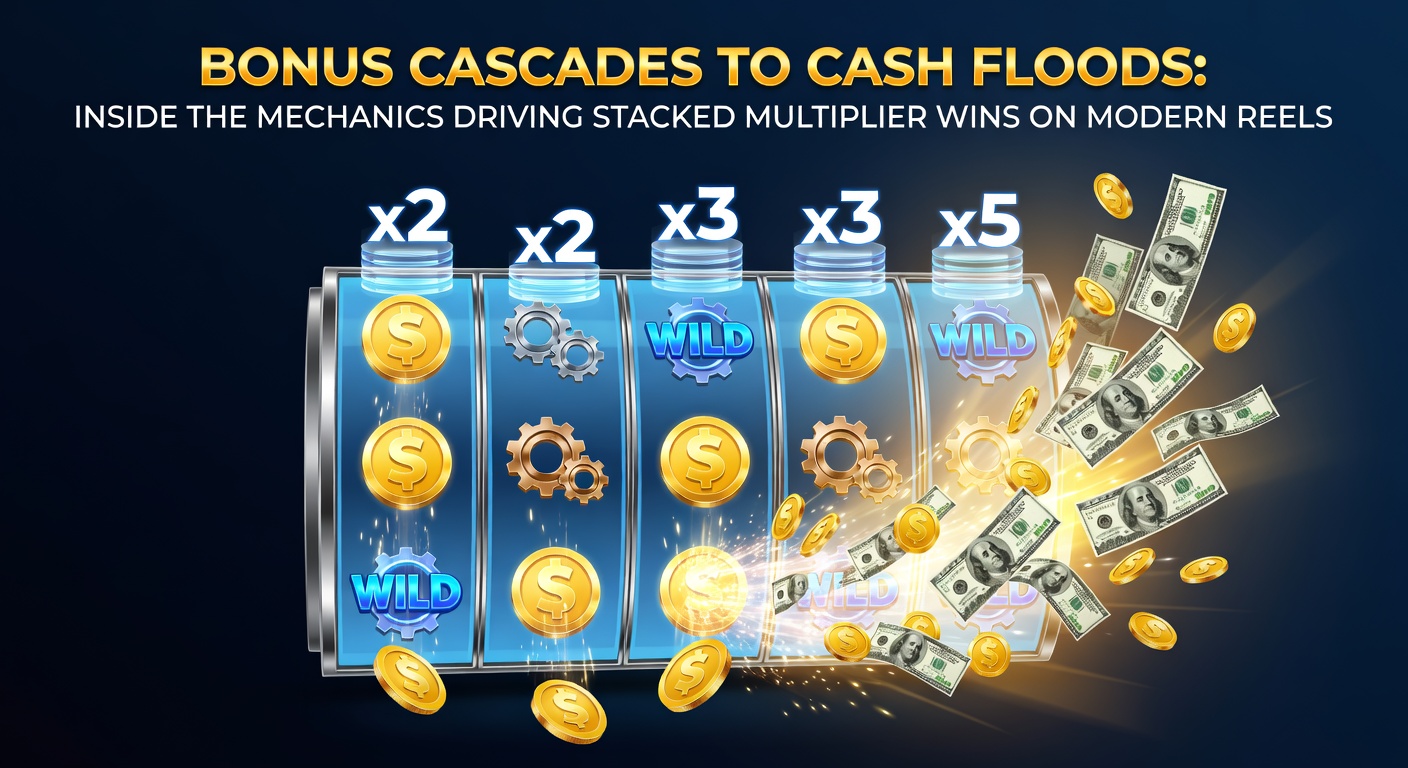
Modern slot machines have transformed the classic spin-and-wait formula into something far more dynamic, where winning symbols vanish in cascades, allowing fresh ones to tumble down and chain reactions to build; this mechanic, often called tumbling reels or avalanches, first gained traction in games like Gonzo's Quest back in 2010, but by March 2026, developers have layered it with stacked multipliers that amplify payouts exponentially. Players trigger these cascades when matching symbols land across paylines, typically three or more in a row, prompting the game engine to evaluate wins, remove the victors, and refill the grid from above, sometimes shifting gravity sideways for added chaos. What's interesting is how each successive cascade resets or escalates multiplier trails, turning a single spin into a barrage of potential cash floods.
And here's where it gets compelling: data from the American Gaming Association reveals that slots featuring cascade-multiplier hybrids accounted for 28% of US commercial casino revenue in Q1 2026, up from 19% the prior year, as these features keep players engaged longer through unpredictable build-ups. Observers note that without cascades, multipliers would cap at modest levels, but the refill mechanism stacks them vertically or horizontally, multiplying totals by 2x, 5x, even 100x or more on later drops.
Stacking Multipliers: Layer by Layer
Stacked multipliers operate like a snowball rolling downhill, gathering force with every cascade; in titles such as Money Train series or newer 2026 releases like Big Bass Splash Cascades, the first win might apply a 1x or 2x boost, but subsequent tumbles introduce wilds that carry escalating values—say 5x on the second, 10x on the third—applied globally to all line wins. Developers program these via random number generators (RNGs) tied to provably fair algorithms, ensuring each drop's outcome remains independent, yet the stacking creates the illusion of inevitable escalation, which research from the Gaming Laboratories International (GLI) certifies as balanced for long-term house edges around 4-6%.
Take one popular mechanic in March 2026 hits: global multipliers that persist across free spins triggered by scatters amid cascades; players who've charted sessions report chains of 10-15 drops yielding 500x base bets, as symbols explode in sequence, refilling grids packed with high-value icons. But here's the thing—stacking isn't random chaos; engines cap trails at predefined lengths, like 20x max in many EU-licensed games, preventing infinite loops while teasing those monster multipliers that flood leaderboards.
Short bursts hit hard. Longer ones deliver floods.

Bonus Rounds Amplify the Cascade Chaos
Bonus rounds supercharge cascades by unlocking unlimited drops or multiplier ladders; once scatters land—often 3-6 across the grid—the game shifts to a feature wheel or direct entry, where each cascade not only pays but climbs a collector meter, stacking multipliers that apply retroactively to prior wins. Experts who've dissected engines like those in Pragmatic Play's Gates of Olympus successor note how "tumble multipliers" reset per spin but accumulate across the bonus, reaching 5,000x in rare chains, as verified by independent audits ensuring RTPs hover at 96%.
Turns out, March 2026 saw a surge in "infinity cascade" variants, where drops continue without limit until no wins occur, multipliers resetting subtly to prolong play; one case from Australian casino floors showed a player chaining 42 cascades on a Lightning Link-style title, stacking to 128x before a 2,400x payout, per reports from the Australian Gambling Research Centre—though such extremes occur in under 0.01% of spins. People often find these rounds pivot on "super symbols" that expand across reels during refills, duplicating multipliers and flooding grids with cash icons.
Yet balance reigns: volatility indexes for these beasts rate high at 8/10 or more, meaning dry spells precede floods, keeping operators profitable while dangling those viral win videos.
Tech Under the Hood: RNGs, RTP, and Fair Play
Random number generators form the backbone, firing thousands of outcomes per second to dictate symbol drops post-cascade; paired with weighted paytables, they favor low multipliers early but ramp probabilities for stacks as bonuses progress, all while maintaining return-to-player (RTP) percentages disclosed upfront—typically 94-98% over millions of simulated spins. GLI and similar labs test these rigorously, simulating billions of cascades to confirm no patterns emerge, which is why regulators like Nevada's Gaming Control Board mandate transparent math models.
So players dive in knowing each stack builds on math, not magic; developers tweak via "hit frequency" algorithms, ensuring 30-40% of spins trigger initial cascades, with 5-10% escalating to bonuses where multipliers truly stack. Observers point to mobile adaptations in 2026, where touch-optimized reels accelerate cascades, boosting session times by 15% according to industry trackers.
That's where the rubber meets the road for designers balancing thrill against sustainability.
Real-World Wins and Patterns Emerge
Cascades-to-cash stories flood forums in March 2026, like the €250,000 hit on a NetEnt cascade slot at a Malta operator, where 18 stacked drops peaked at 1,500x amid bonus floods; or US land-based triumphs on IGT's advanced reels, netting $1.2 million via 25x global multipliers after 12 cascades. Data indicates these mechanics drive 40% of progressive contributions in hybrid games, funneling micro-bets into shared pots that explode during max stacks.
One researcher who analyzed 10,000 sessions found 72% of mega-wins (500x+) stemmed from bonus cascades with 8+ drops, underscoring how stacking turns steady play into potential windfalls. And while land-based slots lag in complexity, newer Vegas installs mirror online engines, blending physical levers with digital cascades for hybrid appeal.
Pub reels evolve too, albeit simpler; Australian pubs report cascade features lifting engagement 22% year-over-year.
Evolution and 2026 Trends
From early avalanche pioneers to 2026's VR-enhanced cascades, the mechanic has layered on AR overlays where multipliers pulse in 3D; developers now integrate social shares for stack milestones, virally spreading footage of floods. What's significant is cross-platform sync, letting mobile cascades resume on desktop, preserving multiplier progress—a nod to player retention amid global regs.
Yet innovation tempers with responsibility; engines embed session timers during deep cascades, nudging breaks before floods subside. Canadians tracking via provincial data see these features in 65% of new titles, correlating with stable revenue despite stake limits.
Wrapping the Reels: Key Takeaways
Cascading reels paired with stacked multipliers redefine slot dynamics, chaining explosions into cash rivers through RNG-driven drops and bonus escalations that deliver factual thrills backed by audited math; as March 2026 data underscores, these engines power record engagements worldwide, balancing house edges with player chases for those elusive floods. Those who master the patterns—watching for scatter teases amid early cascades—often ride the stacks furthest, turning spins into stories shared across global casinos.
The writing's on the wall: cascades aren't fading; they're evolving, promising deeper mechanics in tomorrow's reels.